
- What is Goblin?
- Plot snapshot (brief, with mild spoilers)
- Characters and performances
- Themes and motifs
- Visual and musical artistry
- Why it resonated — examples from the show
- Cultural impact and legacy
- Criticisms and caveats
- Conclusion
Goblin (Guardian: The Lonely and Great God) — An Enduring Tale of Fate, Loneliness, and Love
Guardian: The Lonely and Great God — widely known simply as Goblin — arrived in 2016 as a Korean drama with big ambitions: to blend fantasy and romance, to ask grand metaphysical questions about life and death, and to do it all with a uniquely Korean sensibility of history, humor, and melodrama. Written by Kim Eun-sook and directed by Lee Eung-bok, Goblin quickly became a cultural phenomenon, winning hearts at home and abroad. This article examines what makes Goblin so memorable: the story and characters, the themes, the visual and musical artistry, and its cultural impact.
What is Goblin?
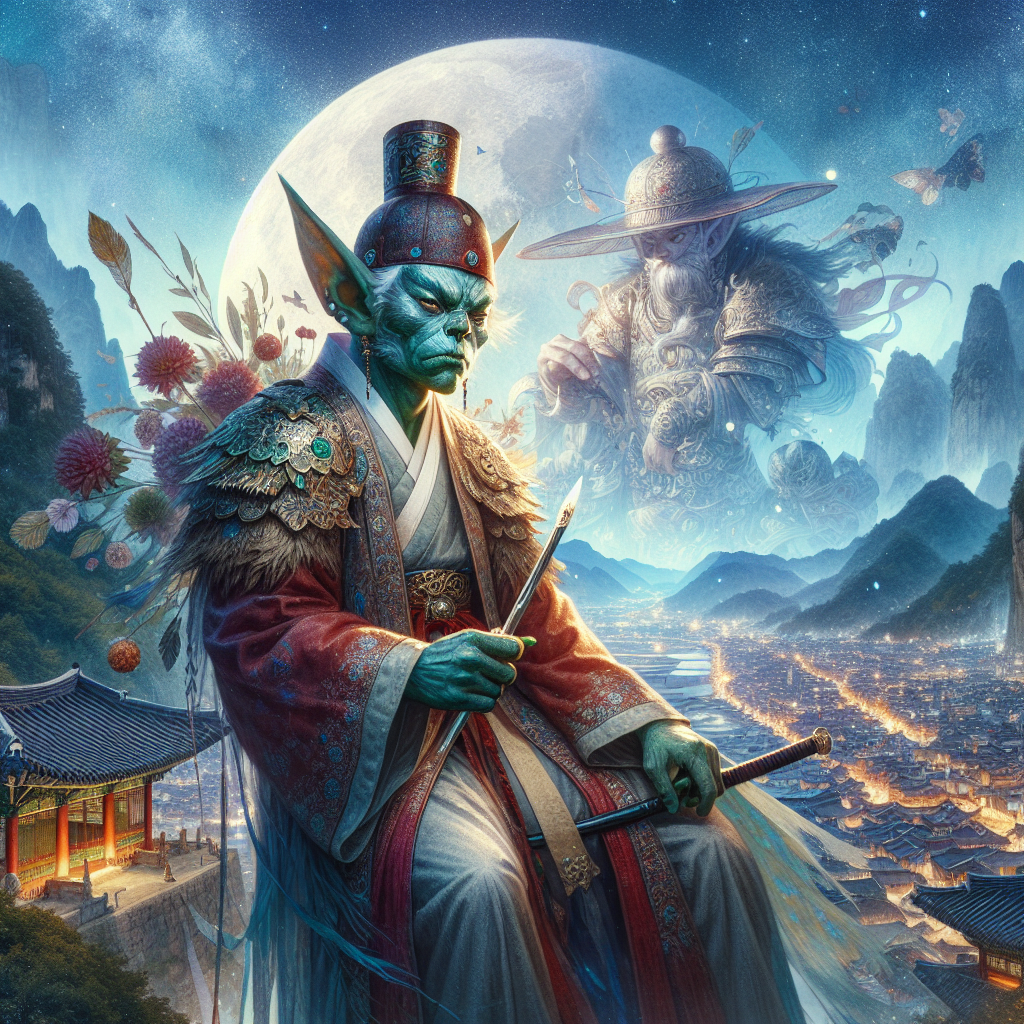
Goblin is a high-concept fantasy-romance about Kim Shin (played by Gong Yoo), a celebrated warrior of the Goryeo era who is betrayed, killed, and cursed with immortality. As punishment (or fate), he becomes an immortal “goblin” — a being with great powers but no way to die. To end his endless existence, he must find a human bride who can pull out the mystical sword lodged in his chest. Enter Ji Eun-tak (Kim Go-eun), a spunky young woman who can see ghosts and proclaims herself the goblin’s bride. Alongside them is the Grim Reaper (Lee Dong-wook), amnesiac, austere, and living as an unlikely roommate with Kim Shin. A secondary romantic thread follows the Grim Reaper and Sunny (Yoo In-na), whose relationship is tender and wry.
The series blends past and present through reincarnation, revealing how the sins and loves of centuries earlier reach forward to shape the protagonists’ lives. Goblin manages to be intimate and epic at once, switching between moments of domestic comedy and sweeping tragedy.
Plot snapshot (brief, with mild spoilers)
If you haven’t seen the series and want to avoid spoilers, skip this short section.
After Kim Shin’s tragic death as a Goryeo general, he is reborn as an immortal protector who watches over humanity. Burdened by endless life, he seeks release, as only his bride can remove the sword that pins him between life and death. Eun-tak, a cheerful high-schooler living with a single mother, has endured hardship but maintains a buoyant spirit and a belief in miracles. When she begins to see ghosts and calls out for help, she meets Kim Shin and the Grim Reaper, setting off a chain of events that forces each character to confront memory, identity, and sacrifice. Reincarnation ties many characters together, and the series moves toward a resolution that is as much about redemption as it is about romance.
Characters and performances
-
Kim Shin (Gong Yoo): Gong Yoo delivers a central performance that balances tragic gravitas with wry humor. His Kim Shin is stately and melancholy, but he can also crack a dry joke or reveal tender vulnerability — especially in quiet scenes with Eun-tak. The role allowed Gong Yoo to play an immortal figure with echoes of classical tragedy and modern loneliness.
-
Ji Eun-tak (Kim Go-eun): Kim Go-eun’s Eun-tak is grounded, open-hearted, and emotionally direct. She acts as a moral and emotional anchor for the show: her belief in miracles and her willingness to love a man who is already dead (in a sense) give the series its warmth.
-
Grim Reaper / Wang Yeo (Lee Dong-wook): Lee Dong-wook’s crisp, deadpan portrayal is a perfect foil to Gong Yoo’s solemnity. The Grim Reaper’s gradual rediscovery of human feeling — particularly through his relationship with Sunny — provides some of the series’ sweetest moments.
-
Sunny (Yoo In-na) and Yoo Deok-hwa (Yook Sung-jae): These supporting roles offer both comic relief and heartbreaking backstory. Their modern-day banter and historical ties to the main characters enrich the world-building and emphasize the theme of reincarnation.
Strong chemistry among the cast is one of Goblin’s key strengths. Scenes that could have been melodramatic instead feel lived-in and earned due to the actors’ rapport.
Themes and motifs
Goblin is more than a romantic fantasy; it’s a meditation on existential questions framed by Korean cultural touchstones.
-
Loneliness and companionship: The title itself singles out loneliness. Immortality, for Kim Shin, is a slow burn of isolation — centuries of watching loved ones die. The formation of a makeshift household between the Goblin, the Grim Reaper, and others becomes a study in how humans (and immortals) stave off loneliness.
-
Fate and free will: Reincarnation, prophetic events, and preordained roles (the Goblin’s bride, the Grim Reaper’s duty) raise questions about destiny. Characters wrestle with whether they can rewrite their fates or are trapped in cyclical patterns.
-
Life and death: By personifying death as a character (the Grim Reaper), the series allows conversations about mortality to become intimate. The show asks: is living forever a blessing or a curse? What does it mean to truly live? Acts of sacrifice and the acceptance of loss form the emotional core of the narrative.
-
Memory and history: Interlaced flashbacks to Goryeo and historical incidents give the show a mythic quality while also examining how collective and personal histories shape identity.
Motifs repeat throughout: the sword lodged in Kim Shin’s chest, the use of bells and echoes to signal fate, and recurring seasonal imagery (snow and autumn leaves) that underscores time’s passage.
Visual and musical artistry
Goblin’s success owes much to form as well as story. The series is cinematic in scope, with meticulous framing, lighting, and costume design.
-
Cinematography: Wide landscapes, lingering close-ups, and a palette that shifts between warm domestic interiors and cold, blue-tinged pasts enhance emotional beats. Scenes in urban Seoul contrast with the vastness implied by the characters’ long histories, reinforcing the tension between ordinary life and the supernatural.
-
Production design and costumes: Kim Shin’s long, flowing coats and Eun-tak’s simpler, contemporary clothing create a visual contrast that helps place the fantasy within the modern world. Historical costumes are rendered with care, adding authenticity to flashbacks.
-
Soundtrack: Goblin’s OST became a phenomenon. Tracks like Ailee’s “I Will Go to You Like the First Snow” and “Stay With Me” by Chanyeol and Punch captured the show’s melancholic romanticism and were widely streamed. The music amplifies key scenes, turning small gestures into unforgettable emotional moments.
-
Direction and pacing: Director Lee Eung-bok (known for grand, polished television) uses slow builds and sudden emotional payoffs, allowing audiences to dwell in moments of silence or abrupt grief. This rhythm keeps viewers invested throughout the 16-episode arc.
Why it resonated — examples from the show
-
Emotional accessibility: Even when dealing with mythic elements, Goblin centers human feelings. A scene where Kim Shin quietly feeds his fellow housemates, or when Eun-tak insists on making rice for the Grim Reaper, makes the supernatural feel domestic and relatable.
-
Juxtaposition of tones: The show moves from slapstick roommate squabbles to gutting tragedy within episodes. This roller-coaster of tone creates an emotional elasticity that keeps viewers both entertained and deeply moved.
-
Reincarnation as narrative device: By allowing characters to live multiple lives across centuries, the show explores the cumulative effects of choices. The gradual reveal of past wrongs and how they echo into modern times creates narrative depth and suspense.
Cultural impact and legacy
Goblin captured massive ratings for a cable drama, propelled its lead actors to international fame, and left a lasting imprint on K-drama aesthetics. It inspired tourism to filming sites and generated fan communities worldwide who celebrated its romantic tropes, its OST, and its visual moments (the snowy kiss, the wedding scene, the rooftop calls). The series also contributed to the broader Hallyu (Korean Wave), proving that a Korean fantasy romance could cross cultural boundaries due to its universal themes of love, mortality, and redemption.
Several elements of Goblin — the “bride” concept, the lonely immortal archetype, the pairing of melancholy with gentle humor — have become touchstones for later series exploring similar ideas.
Criticisms and caveats
No show is without critique. Some viewers found the tone uneven, with sudden tonal shifts that could feel jarring. Others wanted more rigorous plot logic around the fantasy rules. A few argued that certain secondary arcs (and the show’s epilogue choices) were divisive among fans. Yet these criticisms often reflect strong audience investment: debates about the ending and character choices became part of the cultural conversation.
Conclusion
Goblin succeeded because it married a high-concept premise with grounded human drama. Its characters are archetypal yet specific, its visuals are lush without being merely ornamental, and its music turns moments into memory. Whether you came for the fantasy, the love story, or the melancholic poetry of living and letting go, Goblin offers something that remains rare on television: a show that feels both mythic and intimately human. For many viewers, its images and songs linger — proof that stories about fate, loneliness, and the search for meaning still resonate strongly in a modern world hungry for connection.