

- What is Love Alarm?
- Plot and Characters (Spoiler-aware overview)
- Themes and Social Commentary
- Why Love Alarm Resonates
- Examples: How the App Changes Everyday Life
- Criticisms and Limitations
- Lessons for Real Life
- Conclusion
Love Alarm: When an App Rings for Love
Imagine a world where your phone can tell you who loves you. Not cute emojis or flirty messages, but a literal notification: someone within ten meters of you is feeling romantic attraction. That is the provocative premise behind Love Alarm, a South Korean story that uses a fictional app to explore how technology changes the way people love, hurt, and discover themselves. In this article we unpack what makes Love Alarm more than a sci-fi romance gimmick: its characters, themes, cultural impact, and the lessons it offers about intimacy in the digital age.
What is Love Alarm?

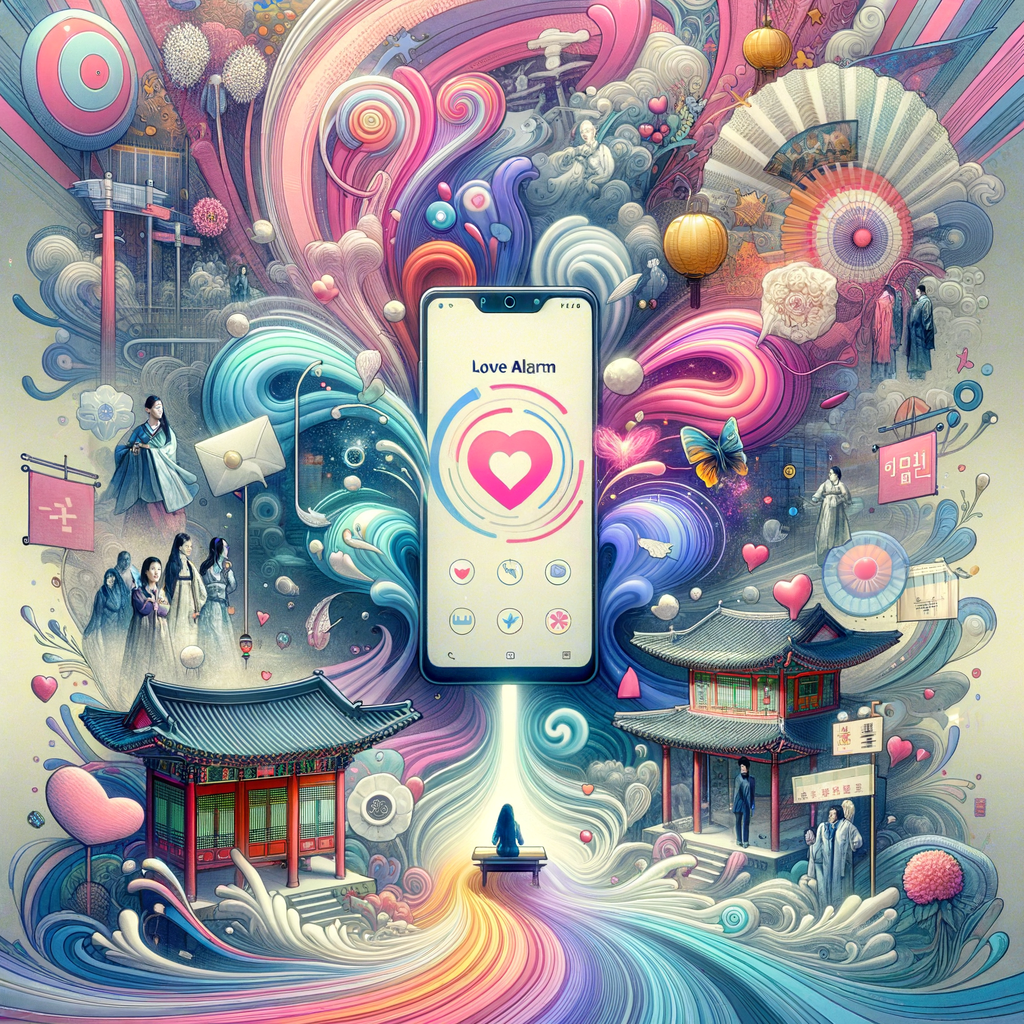
Love Alarm centers on a mobile app (also called Love Alarm) that alerts users when someone nearby has romantic feelings for them. The app’s mechanic is simple and invasive: if an admirer is within the app’s range—originally ten meters—a heart icon appears and the user receives a notification. The app doesn’t identify the admirer unless there’s mutual attraction or certain social settings apply, which creates suspense, competition, and sometimes chaos.
Although the app is fictional, Love Alarm uses this device to ask real questions:
- What happens to vulnerability when feelings can be quantified and broadcast?
- How does the possibility of being “liked” or “ignored” by an algorithm affect self-worth?
- Can an app capture the messy, contextual meanings behind human attraction?
The story follows young people whose lives are upended by Love Alarm. At first glance it’s a love triangle, but the show and original webtoon dig into how social dynamics, class, memory, and mental health interact with a culture increasingly reliant on digital validation.
Plot and Characters (Spoiler-aware overview)
Love Alarm centers on a young woman who becomes the focal point of affection for two very different men. The tension is less about who wins and more about how each character negotiates identity and choice in a world that outsources emotional signals to an app.
Main characters:
- Kim Jo-jo: A kind, principled teenager raised by her aunt after family hardships. She’s empathetic and struggles to reconcile private feelings with public exposure when the app draws attention to her relationships.
- Hwang Sun-oh: A charismatic, troubled figure with a complicated past. He is impulsive, passionate, and often misunderstood.
- Lee Hye-yeong: A loyal, steady friend whose quiet love contrasts with Sun-oh’s volatility. He represents a different model of devotion—patient and communicative.
Rather than summarize every plot twist, it’s worth noting how Love Alarm stages conflicts:
- Public vs. private: Notifications turn intimate feelings into public events—everyone can see who’s “ringing” for whom.
- Choice vs. symptom: Characters question whether the app reveals true feelings or creates them by shaping behavior.
- Power and inequality: Social standing affects how characters use and are affected by the app—some weaponize it; others are harmed by it.
Themes and Social Commentary
Love Alarm thrives because it applies a speculative tech concept to universal anxieties about love, chemistry, and belonging. Key themes include:
- Technology and authenticity
- The app promises clarity but delivers ambiguity. A notification doesn’t reveal intent, history, or the context behind feelings. The story asks: does data equal truth?
- Surveillance and consent
- Even though the app ostensibly respects individual privacy (it doesn’t always name admirers), the mere existence of such a system normalizes surveillance of inner states. This raises questions about bodily autonomy and consent—can love be “monitored” without violating boundaries?
- Validation and social capital
- In a culture of visible metrics (likes, followers), being “loved” publicly becomes currency. The narrative shows how social validation can change behavior, sometimes promoting performative affection or exclusion.
- Mental health and emotional literacy
- Characters grapple with depression, grief, anger, and the difficulty of expressing emotion without a notification to prompt them. Love Alarm suggests that emotional literacy—learning to name and communicate feelings—is more resilient than technological shortcuts.
Why Love Alarm Resonates
Several reasons explain why Love Alarm struck a chord with viewers and readers:
- It amplifies a familiar anxiety. We all know what it’s like to wonder if someone likes us. Love Alarm makes that uncertainty visible and unavoidable.
- It speaks to a generation. Young people who grew up with social media understand the pressure to quantify relationships. Love Alarm is a magnified mirror of that experience.
- Emotional realism beneath the sci-fi. Despite the app premise, the characters’ emotional arcs feel grounded. The show spends time on family dynamics, trauma, and small acts of kindness, balancing spectacle with intimacy.
- Visual and narrative style. The adaptation uses bright, youthful cinematography alongside quieter, contemplative scenes, creating contrast that keeps the audience invested.
Examples: How the App Changes Everyday Life
To see the app’s implications more concretely, imagine these scenarios taken from the Love Alarm world or inspired by it:
- The Elevator Test: Two coworkers ride in an elevator. One’s phone vibrates—the app announces that someone nearby loves them. The moment becomes awkward as passengers glance at each other, their private feelings suddenly public. Small social rituals—eye contact, excuses, nervous laughter—are altered by the notification.
- The Party Ring: At a house party, multiple phones light up. People flock to the person with the most “rings,” treating attraction like a contest. Relationships formed in this context risk being shallow or performative, based on social momentum rather than mutual discovery.
- The Silent Pain: A teenager refuses to install the app, fearing exposure. They watch peers receive notifications and feel invisible. The app thus creates new pressure: to opt in is to gain social access; to opt out is to be marked as different.
These vignettes highlight how a simple feedback loop—notification leads to action, action changes perception—compounds into a culture-wide transformation of courtship.
Criticisms and Limitations
Love Alarm’s premise is potent, but the story isn’t immune to critique. Common criticisms include:
- Overreliance on the gimmick: Some viewers feel the app’s mechanics are used as a plot crutch rather than explored fully. Once the shock value fades, storytelling relies on conventional romantic melodrama.
- Uneven pacing: Adapting a serialized webtoon into episodic television can result in pacing issues—moments that thrive on slow-burn introspection sometimes clash with sudden plot developments.
- Simplified morality: The characters often embody archetypal roles (tortured artist, steadfast friend, pure-hearted protagonist). Critics argue that deeper complexity and growth could enrich the emotional stakes.
These critiques don’t negate the show’s strengths but offer avenues for richer storytelling: deeper exploration of the app’s social mechanics, more nuanced character evolution, and investigation into long-term consequences.
Lessons for Real Life
While Love Alarm is a fictional device, its implications can inform how we think about technology in relationships today. Practical takeaways include:
- Prioritize communication over signals. Digital indicators can’t replace conversations about boundaries, expectations, and feelings.
- Be skeptical of quantification. Numbers and notifications can mislead: a “like” is not an endorsement of character or compatibility.
- Value consent and privacy. Normalize asking before sharing emotional information, and respect someone’s choice to keep feelings private.
- Build emotional literacy. Learning to name and discuss emotions reduces dependence on external validation and fosters healthier connections.
By translating the show’s lessons into everyday habits, we can resist the temptation to outsource intimacy to apps or algorithms.
Conclusion
Love Alarm poses a provocative question: what if technology could reveal who loves you? By dramatizing this idea, it forces us to reckon with how technology amplifies human desires and anxieties. The story succeeds not because it invents a clever gadget, but because it uses that gadget to reveal the messy, beautiful work of growing up, grieving, and learning to love and be loved. Whether you see it as a romance, a social critique, or a cautionary tale, Love Alarm offers a timely reflection on intimacy in an age where our hearts—and the devices that hold them—are increasingly public.